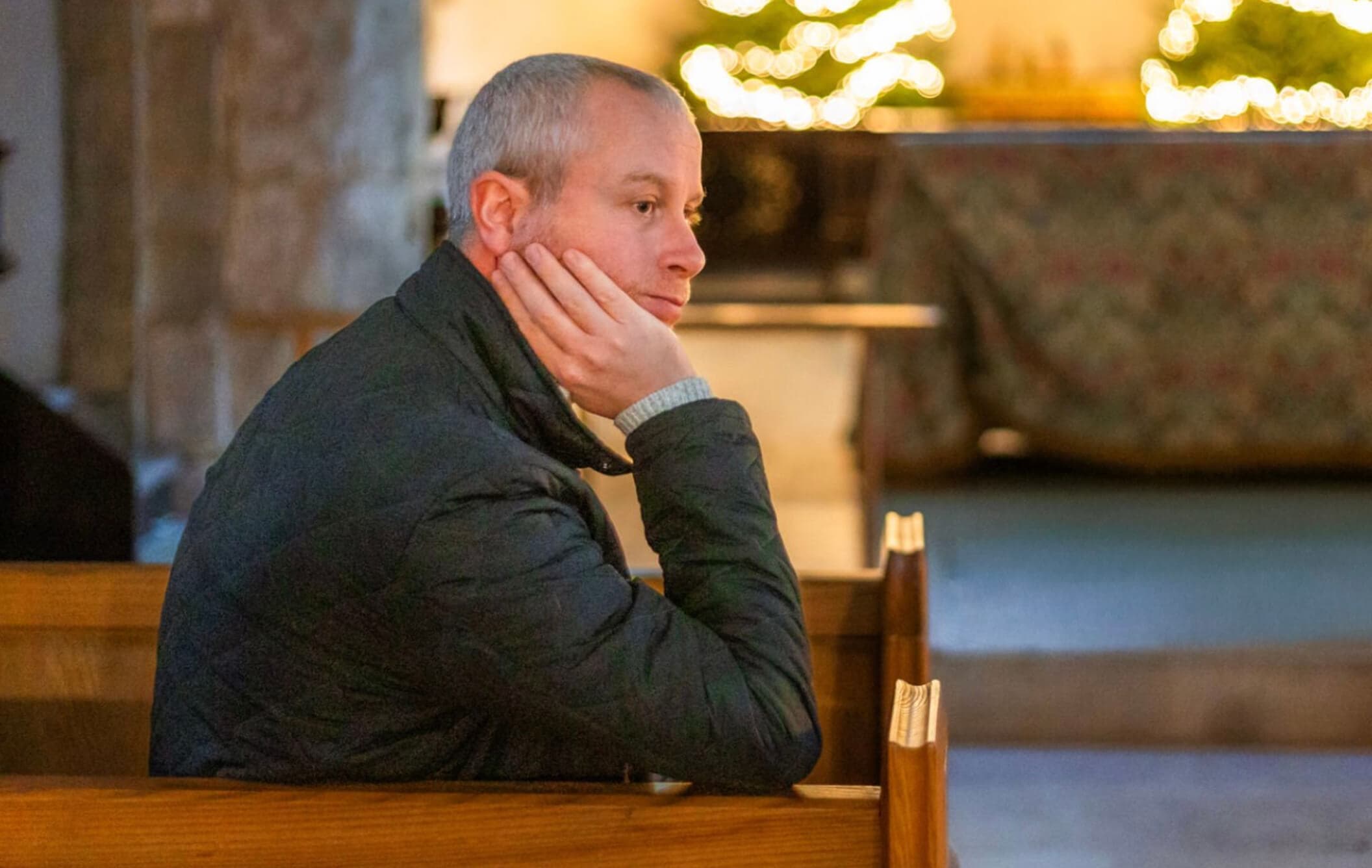
Pastor Guilt Around Struggling Marriages and a Kinder Way Forward
Caring about the marriages in your church is a beautiful part of your calling. But when you look out on a Sunday and see couples who are hurting, it can start to feel heavy, fast. This article is about that quiet weight, why it is so exhausting, and a kinder way to support couples without asking yourself to be a one-person marriage department.
Many pastors live with a constant low hum of guilt around struggling marriages. You may think you should preach better on marriage, meet with more couples, or build more church resources for struggling marriages. We want to talk to that guilt, name it, and offer a gentler path that still honors your heart for people and your love for God.
When Every "How's Your Marriage?" Feels Heavy
There is a certain moment that can hit hard. You ask a couple, "So, how are you two doing?" and the air in the room changes. They shrug, say "fine," but you sense that this is not true. You leave that conversation with a knot in your stomach.
Many pastors carry quiet "if only" scripts, like:
- "If I preached it better, they would not be in this spot."
- "If I met with them more, they would not be talking about divorce."
- "If our church had real church resources for struggling marriages, they would have gotten help sooner."
On top of that, people often treat you like the marriage expert. Yet seminary might have offered one counseling class, and it was mostly theory and big words, not how to walk with a couple who has not spoken kindly to each other in months. You are not a walking marriage guru, and no verse makes bitterness disappear in a week.
The cost of all this is real: exhaustion and worry. The feeling that every divorce is a small funeral for your own ministry, even when you prayed, preached, met, and did everything you knew how to do. There is a gentler way to care for marriages that does not ask you to be everything, to everyone, all the time.
I’m a Pastor, Not a Superhero
Years ago, I got a wake-up call in ministry: it wasn't my job to carry the whole weight of the church on my back.
Being a pastor is vital work, but it doesn't come with a superhero cape. I had to learn the hard way that I'm only human. I had to learn how to actually stop, rest, and recharge.
One of the healthiest things I ever did was find a sounding board, someone I could talk to about the heavy parts of the job. I realized that when I stop trying to control the outcome and leave it to God, I'm much better at helping others find their way to healing.
Looking back, I'm so grateful for my own marriage. It's been my safe place through it all.
The Quiet Guilt Pastors Carry but Rarely Name
Some moments stick with you more than you want:
- Watching one spouse walk in alone for months.
- Hearing "We are separated" when they seemed okay last time you talked.
- Getting a late-night text, and instead of feeling spiritual, just feeling tired and a little annoyed.
Then the guilt starts talking. "A good pastor would be glad to meet." "A real shepherd would have seen this coming." Church culture can turn that guilt up even louder. People may assume your own marriage is always strong, always peaceful, and always romantic. So when you feel stuck or confused in your own home, you also feel like you cannot say anything.
Guilt twists good desires. You want to love your people well. So you say yes to every meeting, every coffee, every emergency talk in the hallway. After a while:
- You feel resentful, but then feel ashamed for being resentful.
- You feel empty at home, but tell yourself to push through.
- You feel less joy in preaching because you keep replaying who is still hurting.
There is a quiet belief underneath all of this: "If I were a better, more godly pastor, I could fix this."
That belief keeps many pastors from asking for help or adding outside support. We want you to hear this clearly: feeling overwhelmed does not mean you are unfaithful or uncaring. It means you are human, serving in one of the hardest areas of life.
Why Your Love for Couples Is Not the Problem
Your heartbreak when a marriage falls apart is not a sign that you are failing. It is a sign that your heart is working. You care about covenant, loyalty, and grace. You care about kids who live in that home. That is good.
The mix-up happens when love turns into a crushing sense of responsibility. Loving couples deeply does not mean you are responsible for every choice they make. You can:
- Preach on forgiveness.
- Pray for soft hearts.
- Meet with them, listen, and offer wise counsel.
What you cannot do is climb inside a spouse's heart and make them let go of a grudge. You cannot erase years of hurt that started long before they ever heard you preach. Your sermons, prayers, and meetings matter, but they are part of a bigger picture, not the whole picture.
Think of marriage care like a team sport. Healthy churches often have:
- Preaching that casts a big vision.
- Small groups where couples feel safe to share.
- Older couples who quietly mentor younger ones.
- Workshops and tools that help with practical skills.
You plant and water, but God brings the growth. The "if I were godly enough, I could fix this" mindset hands you a job that belongs to the Holy Spirit. There is a kinder way that honors your role without asking you to be God.
A Kinder Way to Support Marriages Without Burning Out
What if the goal was not fewer struggling couples, but less isolation for you as you care for them? You do not have to carry marriage ministry alone. You can build simple layers of support around couples so you are not the first and only stop when things get hard.
A healthier model of care can look like:
- Sermons that give vision and hope.
- Small groups where couples can be honest.
- Mentoring couples who walk with others over time.
- Live on-site Christian marriage workshops that offer tools and practice.
Workshops specially fit into this picture. They give couples a place to learn and practice skills, not just hear ideas. Instead of trying to "download" everything into one counseling visit, a workshop can cover the big teaching and the core skills.
Our team at Developing Great Relationships partners with churches by hosting those live, on-site workshops. We handle planning, teaching, and follow-up, while you stay in your lane as the trusted shepherd. This does not replace pastoral care. It supports it by giving couples more touchpoints, more practice, and more hope between your sermons and counseling meetings.
How Marriage Workshops Lighten the Pastor's Load
Think about a couple that tends to argue loud and fast. They come to a workshop and learn one simple communication tool that helps them slow down, listen, and speak with less heat. The next time you meet with them, you can say, "Let's use that listening tool you learned," instead of starting from zero.
Over time, something helpful happens: your church gains a shared language around marriage.
That shared language makes your follow-up easier and lighter. When an outside team runs the workshop, you do not have to create all the content, manage all the details, or stand in front of the room every minute. You can just be present, respond to people, and care for your own heart.
Schedules shift in summer. Weddings and anniversaries pop up, and many pastors start thinking ahead to the fall. This is a natural time to look for church resources for struggling marriages that you can put in place before the calendar fills again. Live workshops can be a simple, low-pressure way to care for couples while also caring for your own limits.
Saying Yes to Help and No to Crushing Guilt
The shift we are inviting you into is simple but deep: from "I must fix every marriage" to "I will faithfully care for marriages with help and practical tools around me." Instead of adding more late-night meetings, what if you added more support structures that share the load?
Saying yes to outside help is not weakness. It is wise stewardship of your energy, your own marriage, and your long-term ministry. Marriage workshops can become one strong part of your wider care for couples, so you are not standing alone in the storm every time a marriage starts to shake.
If you are ready to explore marriage workshops that can support you, serve the couples in your church, and take some effort off your plate, you do not have to figure it out alone. Marriage workshops can give your people practical tools while you stay focused on the parts of ministry only you can do.
To hear more about how Developing Great Relationships can partner with you and your church through live, on-site marriage workshops, click the button below and choose "Get more information."
Find Real Help And Hope For Your Marriage
At Developing Great Relationships, we walk with couples through practical, faith-centered steps that fit real life, not just ideals. When you are ready to take the next step, reach out and contact us so we can support you personally. Together, we can begin rebuilding a marriage that feels safe, loving, and resilient.